Ul canef la canapa
Tue, 29/04/2025 - Curiosities
Tue, 29/04/2025 - Curiosities
Ul canef la canapa
Once it was widely used for domestic purposes, it was cultivated in the fields and employed for multiple uses
UL CANEF LA CANAPA
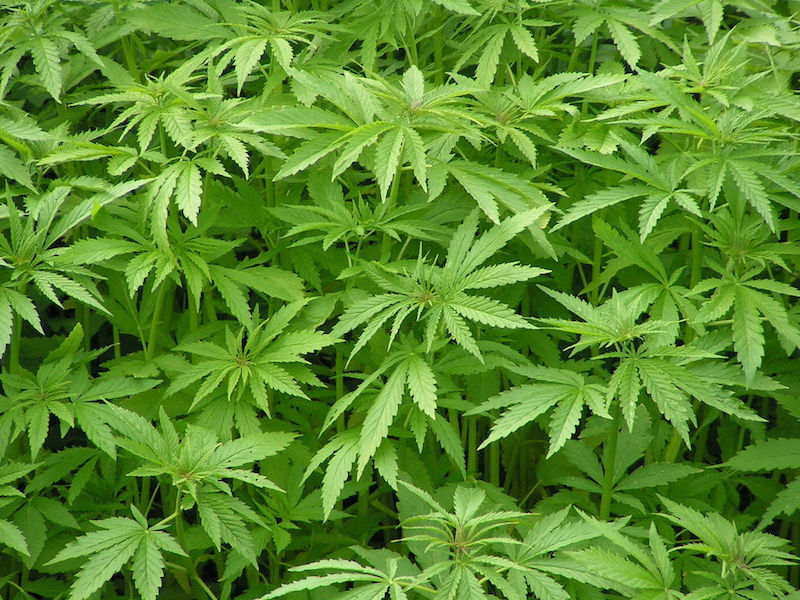
Hemp grows erect, with branches at the top reaching a height of about two meters, similar to corn tüurch. At the top, there is a ciüf inflorescence consisting of small fióor flowers, fòoi leaves, and spiighi ears, which are home to small, rounded suméezi seeds, gray in color griis, which are kept for sowing the following year.
The plant is cultivated for the fibers contained in the rüusca bark. The filamentous material is held together by an organic substance called miòola.
Hemp was not a crop grown on a large scale, but for family use.
To obtain the final product, the thread fiil, it was necessary to go through several processing stages, using special tools.
The cultivation took place on small plots of land of a few square meters tracèei carved out from land where there were other crops useful for the family's sustenance, such as gardens orc’, fields càap, or vineyards vigii.
VANGAA O ZAPAA VANGARE O ZAPPARE
In April, they began preparing the soil with abundant fertilization ‘ngrasàa. To loosen it, they could proceed in two ways:
- if the cultivation was to be carried out in a field, where generally the soil is softer, they would use a spade to vangava vangàa;
- if it was done between the rows tròosi of the vineyards, where the soil is harder, they would zapàa.
SUMNAA SEMINARE
The small seeds were carefully spread over the soil and pressed slightly to make them penetrate so that the wind wouldn't lift them or the birds wouldn't peck at them.
It was important to know the quantity of seeds that managed to germinate: if the hemp grew very densely, the stems became thinner and a very high-quality fiber was obtained, while if it grew sparsely, the stems became thicker, consequently the fiber became harder.
UL TAI IL TAGLIO
The hemp reached proper marüuda maturation at the end of August when the stems and leaves began to yellow.
The cutting was done as close to the base as possible, in order to utilize the fiber in its full length, using a curved blade sharp on the inside with a wooden handle scighez: they would grab a handful na bràaca of hemp, cut it at the base, and carefully deposit it on the ground.
As soon as a small pile en mugilii was formed, they would tie it into small bundles mazzet and leave it to dry in the sun for two or three days.
AL PRAT A MASERAA MACERAZIONE AL PRATO
Then they would wait for the second cutting of the grass la digör to place it on the meadow, where it would remain for about a month.
This was a very careful operation; the stems had to be arranged in such a way as not to overlap, lying on the meadow in their full length.
With the synergy of several factors like dew, sun, rain, and not least the grass itself in the growth phase, a fermentation process took place, which separated the fibrous parts from the woody ones.
A SECAA ESSICCAZIONE
Once this period had passed, the hemp was withdrawn from the meadow, taking care not to damage too much the grass from the third harvesting terzöl, and it was then exposed to the sun in a protected and dry place to dry, thus facilitating a series of operations useful for definitively separating the woody parts from the fiber.
Then it was collected in bundles and, one by one, went through all the subsequent phases.
The sun also lightened the fiber made dark by its stay in the meadow; on gloomy days, it remained darker mogna.
SGRAMULAA SGRAMOLATURA
They would take a handful of hemp and set it to be pounded on the frantòi.
The function of this tool is to crush the stems to separate the fibers from the bark and other impurities: families that harvested little hemp would first beat it with a stick before using the frantòi, while those who grew a lot would pass it under the pisù.
frantòi: A wooden tool that, at first glance, may seem like a small trestle made of two parallel boards shaped at the bottom and joined at the bottom by a wooden crosspiece.
The upper part was made up of three slats: one placed flat on which the hemp to be beaten rested, the other two located on the sides like parallel sideboards. Laterally, there was a movable arm functioning as a press that interlocked in the space formed by the two strips and was equipped with a rounded handle.
The movable lever is connected to the three slats by a pin.
pisù: A specific pestle located on one side of the stack (water-powered frantoio).
BAT UL CANEF BATTERE LA CANAPA
After the gramolatura, there were still woody parts, which were eliminated by spatolatura by beating with a spatula the bundles hanging from the spadulogn, until the filaments remained free from impurities.
However, there were those who were satisfied and left some residue i ghen fava miga tanti.
la spadula: A spatula-like tool carved from wood, whose length ranges from 50-60 cm
al spadulogn: Formed by a board about 1.5 m tall, vertically inserted into another horizontal piece that acts as a platform on which one can rest their feet.
On the upper edge, it is hollowed out in a crescent shape where the hemp fibers are placed.
SCARPINAA CARDARE
Carding is a very important stage, aiming to separate the part of the precious filament from the waste, that is, the stoppa a stopa.
The fiber was taken and vigorously pulled, passing it several times over the nails of the scarpinasc until all the waste was completely eliminated (it's a bit like combing hair).
After the "combing," a mass of long, very thin, and softer filaments was obtained.
To prevent these filaments from getting tangled ngarbuias, they were slightly twisted sturgüt forming what was improperly called a braid trescia.
At this point, spinning could begin.
scarpinasc: A wooden board about 30 cm x 15 cm, equipped with holes for gripping. In the center, 30-40 nails are driven in.
AL ROCUL LUOGO DI RITROVO
In winter, the only place to stay warm was the stable: people gathered in large numbers in this place.
To pass the time, men played cards or did small jobs like building baskets cavagn, children had fun playing sitting on the foliage patüsc, while women and older girls spun filavano wool, linen, and hemp.
To spin, it was necessary to be in a humid environment because the fiber dried easily and the stable was the suitable environment. They would, in any case, address this inconvenience by moistening the hemp with saliva.
FILAA FILATURA
Spinning began by fixing the “braid” to the rocca roca, then taking some very thin threads (five or more, depending on how thick one wanted the thread) and tying them with a knot to both ends of the füs.
Then, they pulled more filaments, passing them between the thumb and index finger of one hand while with the other, they rotated the spindle suspended in air in a motion like a top; when it was full, they would move to another, and it all started again.
With experience, they didn't waste time each time counting the threads to pull but understood by simple touch how many there were: at the moment some more would stick out, they would send them back, because if they joined the others, they formed bumps in the thread cotüli or Ave Maria.
roca: This is a thin wooden stick divided (sfendüt) for about 10 cm at one end, where the “braid” was fitted.
füs: Formed by a turned and tapered piece of wood at both ends, on which the thread is wound during the spinning and twisting operation.
FA SÜ L’ASCIA FORMARE LA MATASSA
They took the thread from the spindle, fixed it to the asp, and by turning the crank, wound it into a skein.
Asp: Two vertical supports fixed to the base hold the rotating horizontal axle, into which perpendicular paddles are inserted that allow for the winding of the thread. It works by means of a crank located at one end.
FA SÜ L’GAMUSEL FORMARE IL GOMITOLO
The skein was stretched on the bicòca whose thread was then wound into balls.
These last two tools were easily replaced using one end of a table or the hands of a family member.
bicòca: Composed of four crossed slats, placed 40 cm apart, with four adjustable vertical pins located at the ends, all revolving around a vertical iron rod fixed to a wooden base that functions as a support.
CUBBIAA UNIRE PIÙ FILI
If thicker thread was needed, several skeins were taken and joined using the spindle, but in this operation, it must be turned in the opposite direction compared to when it is used for spinning.
By joining more threads, laces were obtained, joining more laces, ropes were made.
TÉS UL CANEF TESSITURA DELLA CANAPA.
The thread was taken to weave in Arigna. With the finest fabric, bed sheets lensoi were made, with the waste, the pelorsc special carpets on which they laid grain to dry in the sun, li belachi (cover for animals on particular occasions), laces ligam, and ropes cordi.
It took several years to have enough thread to use for weaving.
FA LA BÜGADA IL "CANDEGGIAMENTO"
It is a procedure used either on the skein or on the fabric, to make it whiter.
They took the ash from a light wood like abete pesc, poplar trees, tiglio teei, placed it in a cloth bag, and threw the whole thing into a large culdèra filled with water containing the material to be bleached.
Since during boiling, the skein or the fabric tended to float back to the surface, they tried to keep it submerged with the help of a stick.
The longer the thread or fabric stayed in the water, the whiter it became.
Since the fabric appeared stiff and rough, it underwent deruscatura; it was spread out on a meadow in the sun for several days while continuously wetting it: it became softer.
UL LIII IL LINO
Linen underwent the same processing as hemp, but the thread was more refined, mainly used for making sheets.
The fiber was smaller than that of hemp because its stem grows to a height of 50-60 cm, therefore the filaments, being shorter, were more difficult to spin.
Sometimes the two fibers were woven together.
A gentle contribution from Mariella of UILDM Sondrio: memories collected from her parents