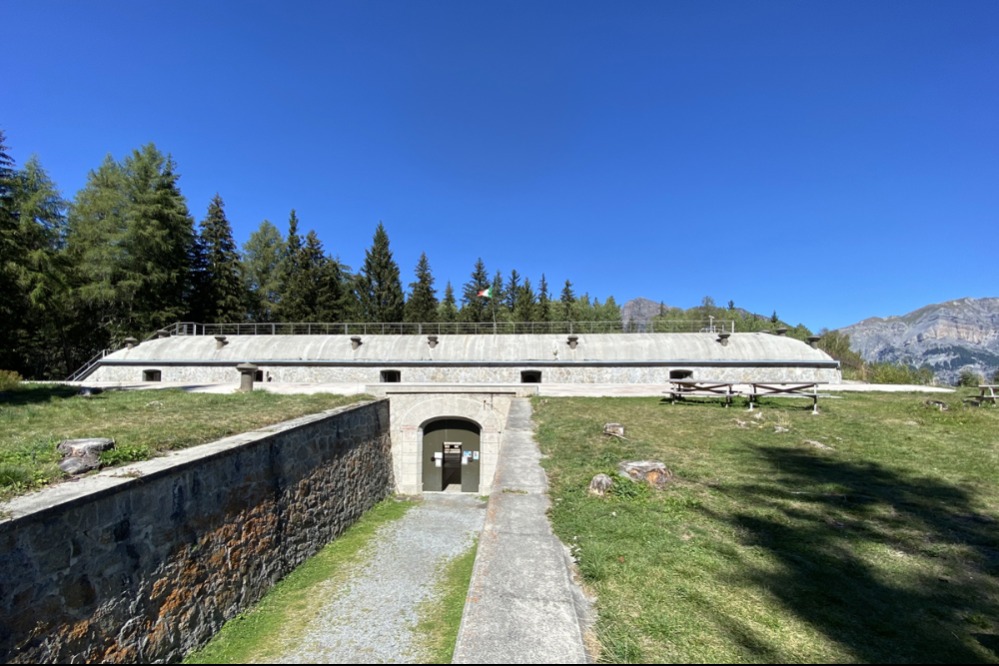
Forte Venini of Oga: the fort that overlooks the whole Bormio basin
A mess tin.
A small metal saucepan with a lid. The soldiers used it for their rations every day—on the front line and back in the rear areas. At the Forte di Oga you can spot it in the display case, along with ammunition, medical dressings, letters, communication equipment and medals.
Small stuff. It tells the First World War story better than a whole chapter from a history book.
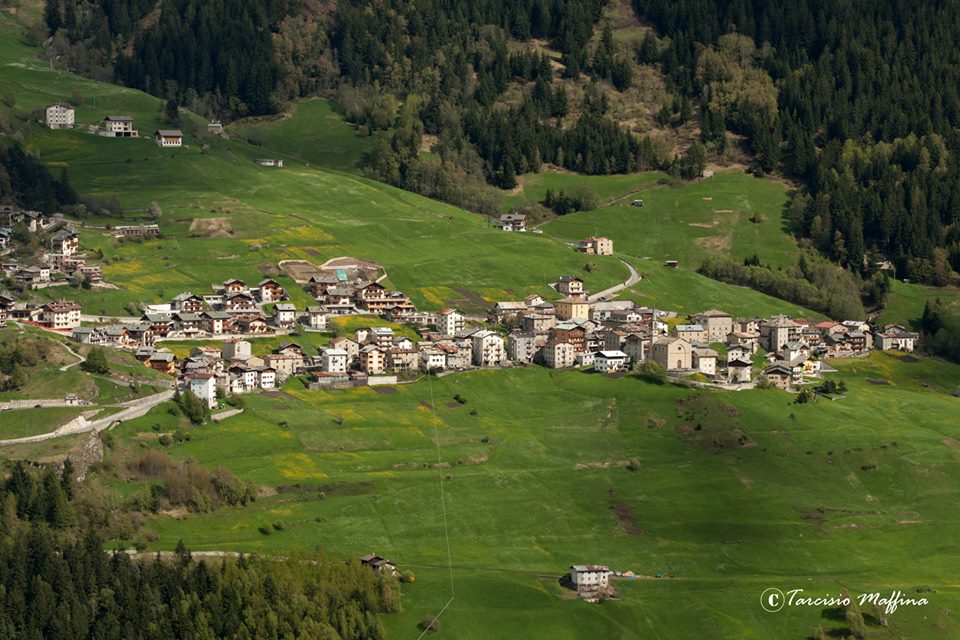
The Forte Venini is in Oga, in Valdisotto, above Bormio. It’s one of Europe’s best-preserved permanent fortifications from the First World War. And inside, you can walk it through room by room.
A two-minute history
Built between 1908 and 1912, at a time when—under the Austro-Hungarian Empire—the air was already heavy. It was meant to defend the passes of Upper Valtellina.
In the Great War it was used a great deal. When the war ended, it was handed over to the Guardia di Finanza.
In 1935 the “casermetta” was added—the building you can see just before the entrance.
In 1938 the fort was named after Captain Corrado Venini, awarded the Gold Medal for Military Valor, who was killed in combat in May 1916.
At the end of the 1930s, an artillery unit moved in, ready to get the guns working again. In the Second World War the fort never fired.
1958: the cannons are sold. The abandonment begins.
2003: restoration, a museum, doors open to visitors.
What you see inside
The real spaces—the ones where the soldiers lived. In a row:
the entrance body with guard rooms, a kitchen, a pantry and latrines.
the long inner courtyard.
the armoury, the ammunition stores for the shells, the soldiers’ and officers’ barrack rooms, the infirmary.
the generator room (the fort generated its own electricity, and the generator is still there).
the two retractable defensive turrets.
On the first floor, the battery corridor and the command room, where they communicated via intercom.
Underground: the powder magazine and the boiler room.
A little curiosity about the materials. Blocks of stone covered by a thick layer of cement, gravel and sand from the Val Cadolena and the Adda, lime from the dolomite of Bormio, and iron from the Premadio furnaces.
And to get everything up there, they built a new road in place of the mule track—the road you use today to reach Oga.
(There you go—you’ve got it.)
The terrace
From the courtyard you go up onto the roof, passing by the ditch and the protective wire. On top there are the four armoured domes.
And the view. The Bormio plain, Valdisotto, Valfurva, Valdidentro. The Tresero, the Forni glacier, Confinale, Cevedale, Gran Zebrù (3,851 metres—the highest peak you can see from up here), the Reit, Mount Scale.
There’s a panel with the outline and name of every mountain. Useful for settling family arguments about which mountain is which—especially Cevedale.
Around it all is the Paluaccio di Oga nature reserve, with the bog, and a patch of larch and fir on the ridge where the fort stands—the Dossaccio.
Practical info
Where: Loc. Al Forte di Oga, Valdisotto (SO)
When: from 19 September to 1 November 2026, only Saturdays and Sundays, from 10am to 5pm
Tickets: adults €5. Free for children up to 10 years old. Free for people with disabilities, carer €2.50. Groups of more than 10 people: €4 each.
Accessibility: for visitors with mobility disabilities, it’s only possible to visit the ground floor.
Info: 0342 950166, fortedioga.it