An abandoned village full of stories and mystery
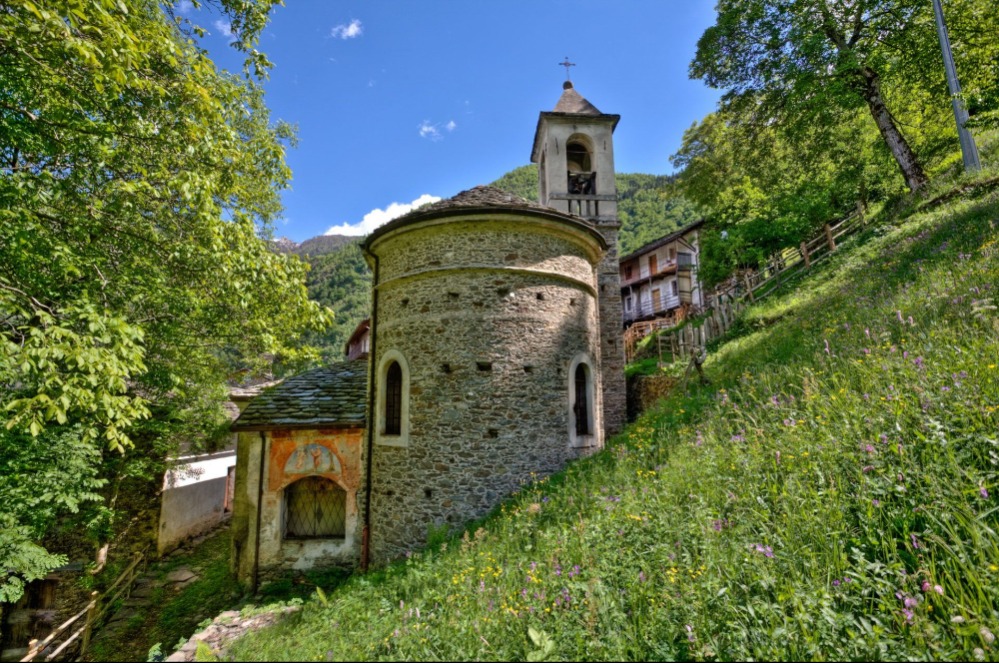
Nestled in the Val Fabiolo, a side valley of the broader Val Tartano, Sostila is a small village now semi-abandoned, but rich in charm and mystery. Set on a shady and silent slope, it still preserves the traces of a past filled with legends, popular beliefs, and a simple life connected to the mountains.
Once inhabited by a small community of families linked to chestnut gathering, orchard cultivation, and work in the iron mines of the Orobic Alps, today it is a place out of time, where the memory of those who lived there still lingers.
🏘 The village and its history
The stone houses with slate roofs (local granite slabs) date back to the seventeenth century, although the area was probably colonized much earlier, in the Middle Ages, by those escaping the frequent floods of the valley floor.
In 1928, Sostila had about 120 inhabitants, but between the 1950s and 60s, a gradual depopulation began, reaching only 14 residents by the early 1960s. Today, the village is almost completely uninhabited, but continues to live on through oral stories, religious festivals, and legends.
The only residents are Fausto Mottalini and Alessio, who have chosen to distance themselves from urban comforts to live a lifestyle that many desire today... but is not so easy to embark on. True nature, connection with reality, simplicity, and happiness.
👻 The legends of witches
Sostila is also known as “the village of witches.” According to tradition, the witches of Val Fabiolo gathered in its streets to celebrate their sabbaths.
One of the most well-known tales is that of the “Witches of the Era,” linked to a house located on via dell’Era. A mysterious and reclusive family of women was avoided by the rest of the village. One evening, a curious young man saw with his own eyes the four women unscrewing their heads, combing their hair, and then disappearing into the chimney at the sound of the Ave Maria.
📍 Other places related to the legend:
- Piana del Crap del Mezzodì, above the village
- Culmine di Dazio, where a cross was placed to “exorcise” evil
🕯 Night processions and apparitions
It is said that on the path between Lavisolo and Campo one could encounter night processions made up of hooded figures holding candles. One man, Gaspare, received a candle from one of them, which at dawn turned out to be a human tibia...
The valley itself was also the scene of inexplicable events, such as floods attributed to dark forces. In 1911 and 1987, the Fabiolo stream caused significant damage. Priest Don Abbondio of the Patrona recounted how he ascended to the valley to confront evil spirits and came out wounded, his body marked by blows from “invisible” sticks.
⛪ Our Lady of Snow
The only time of year when Sostila repopulates is on the first Sunday of August, for the feast dedicated to Our Lady of Snow, the patroness of the village.
📍 The church dedicated to her is now a symbol of protection for the entire valley. It is said that in the past she was invoked during periods of drought, and that it miraculously rained after processions started from Campo Tartaro.
🥾 How to visit Sostila
Today, Sostila can be reached on foot from various directions, with hiking trails suitable for trained hikers:
- From the Lavisolo path
- From Campo Tartano (with hiking signage)
- Average travel time: about 1.5 – 2 hours depending on the route
- The village is freely accessible but uninhabited except for Fausto and Alessio
🎒 Bring water, hiking shoes, and a good dose of curiosity (and respect for the stories of the place).
📸 Why visit
Visiting Sostila is a unique experience for:
- Lovers of abandoned villages
- Those attracted to mysteries, legends, and alpine folklore
- Hiking enthusiasts and lovers of solitary landscapes