Mancapane Castle: an ancient fortress hidden among the woods
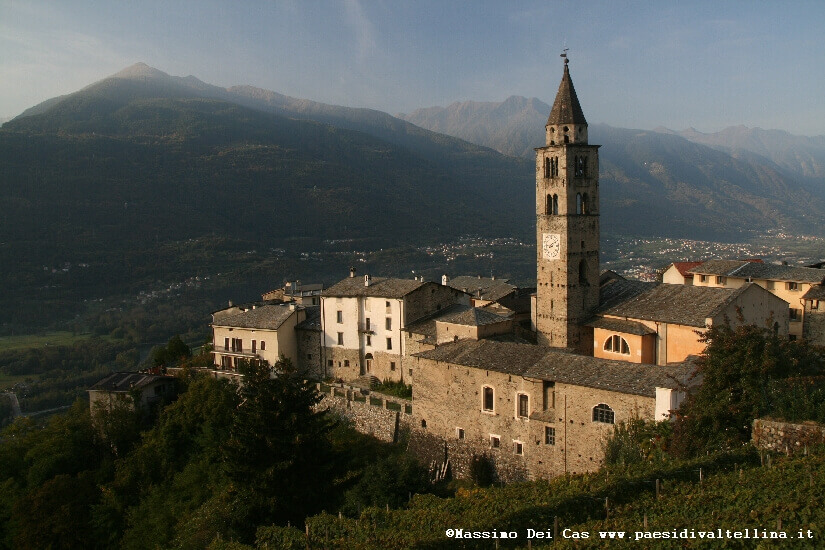
If you enjoy walks through nature and history, Mancapane Castle is a perfect destination. It is located in Montagna in Valtellina, at 900 meters above sea level, surrounded by greenery and accessible only on foot.
🚶 How to get there
To get there, start from via Benedetti, at the beginning of the village. The path is simple and well-marked, suitable for families. In about twenty minutes, among chestnut trees and streams, you will reach a clearing where the castle appears suddenly, hidden by the trees. In front of it, a meadow where you can relax or have a picnic.
🏗 A 13th-century castle-enclosure
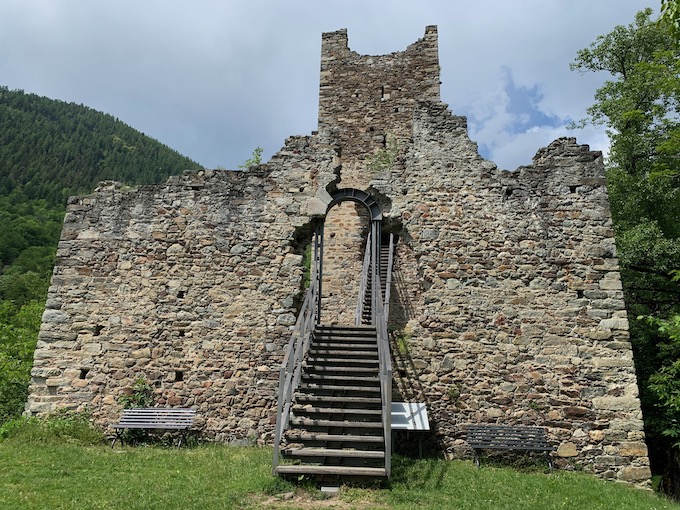
The castle likely dates back to the 13th century. It was a castle-enclosure, consisting of a central tower and a surrounding wall. It served a lookout and defense function, built at a strategic point overlooking the valley.
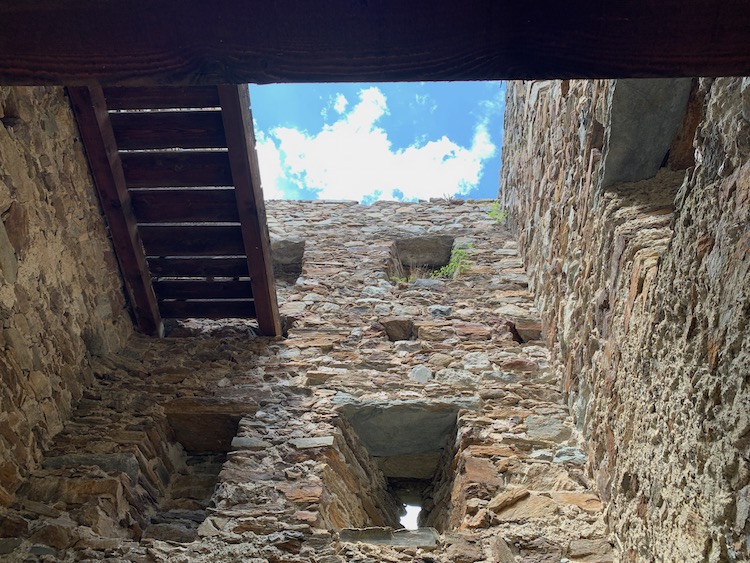
The tower is about 21 meters high, with narrow slits from which soldiers could observe or defend themselves. The original access was positioned four meters high, reachable only by a removable ladder, used in case of an attack. Some slits were equipped with chutes to drop stones or boiling oil.
The tower was not inhabited: it was used only for guarding. The remnants of the parapet walk and the custodian's lodging can still be seen. Today, you enter via a wooden ladder that leads to the first floor, from which you can observe the slits up close.
🕰 The name and legends
The name "Mancapane" has uncertain origins. According to a local legend, during a siege by the people of Como, the defenders ran out of bread, hence the name. Another more historically reliable hypothesis is that the name derives from "Catapani," a Greek term corresponding to "captain," which would relate to the Guelph family of De' Capitanei, who settled in the nearby De Piro Castle in Grumello in 1372.
It is also said that at one time the castle was connected by an underground tunnel to the Grumello castle. It has never been found, but the rumor still circulates.
In 1526, the Grisons ordered the demolition of the fortification.
🌿 What's around
In front of the castle, there is a sunny meadow perfect for a stop. A little further down the path, you will also encounter Ca' di Mazza, an old restored water mill still operating thanks to the flow of the Davaglione stream. An interesting stop for those wanting to discover how traditional milling worked.
Mancapane Castle may not be among the most famous destinations, but it has everything: history, nature, legends, and silence. Ideal for a peaceful walk with a scenic finale. If you’ve never been, consider it for your next outing.