Photographic exhibition memories of sports beyond competition
Mostre
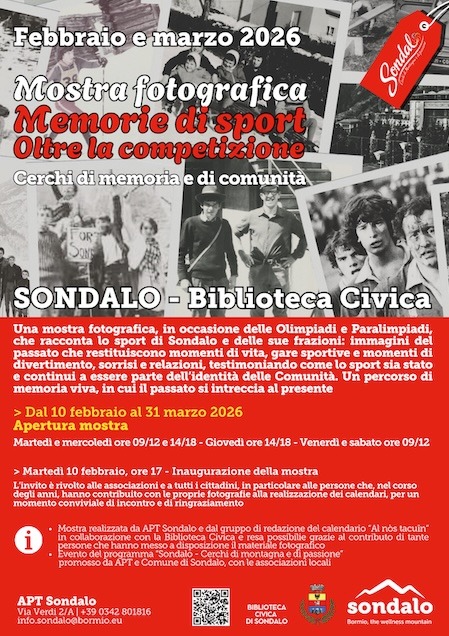
The Civic Library of Sondalo hosts a photographic exhibition dedicated to sports and local traditions. The exhibition "Memories of Sport - Beyond Competition" will be open for visits from February 10 to March 31, 2026.
The initiative, organized for the Olympics and Paralympics, tells the sporting history of Sondalo and its fractions through images from the past. The photographs showcase moments of life, sporting events, and occasions of fun, testifying to how sport has been and continues to be a part of the community's identity.
The exhibition will be open on the following days and times:
- Tuesday and Wednesday: 09/12 and 14/18
- Thursday: 14/18
- Friday and Saturday: 09/12
The inauguration will be held on Tuesday, February 10, 2026, at 5 PM. The invitation is extended to associations and all citizens, especially to those who have contributed their photographs over the years to the creation of local calendars.
The exhibition is organized by APT Sondalo and the editorial team of the calendar "Al nòs tacuin", in collaboration with the Civic Library. The project is made possible thanks to the contribution of many people who have provided their photographic material.
The event is part of the program "Sondalo - Mountain and Passion Circles," promoted by APT and the Municipality of Sondalo with local associations.