📍 Where it is located
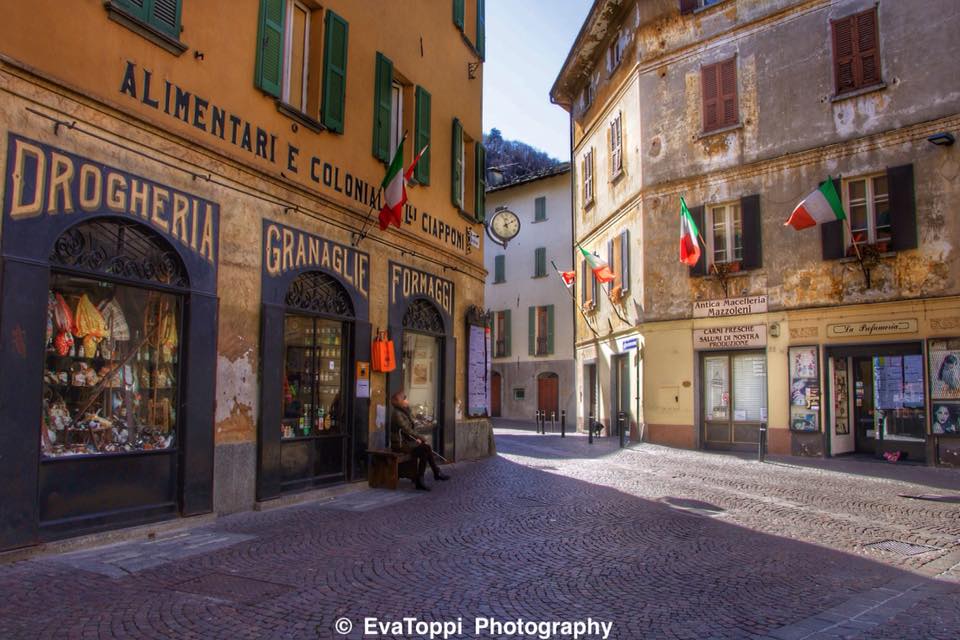
Palazzo Malacrida is situated in the upper part of the historic center of Morbegno, in contrada Scimicà, one of the oldest neighborhoods in the town. From here, you can oversee the entrance to Valgerola and have a nice view of the valley and the Costiera dei Cech.
You can easily reach it on foot from the center, walking just a few minutes through cobbled streets. It is also indicated along the guided tour routes of the village.
🏛 A noble palace, designed to impress
The palace was built in just four years, between 1758 and 1762, on the commission of Gian Pietro Malacrida, a member of one of the most important families in Morbegno.
It is not an austere residence: it is an urban villa designed to host guests, impress, and express a social status. The architect was Pietro Solari from Como, who created a sober exterior, but a richly decorated interior.
Even today, the contrast between the simple facade and the decorated interiors leaves visitors in awe.
🖼️ The interiors: a small Rococo masterpiece
Upon entering, you walk through an atrium with refined stuccoes that leads to a monumental staircase: the marble balustrades from Viggiù, the sculpted volutes, and the medallion in the center of the vault announce the style of the upper rooms.
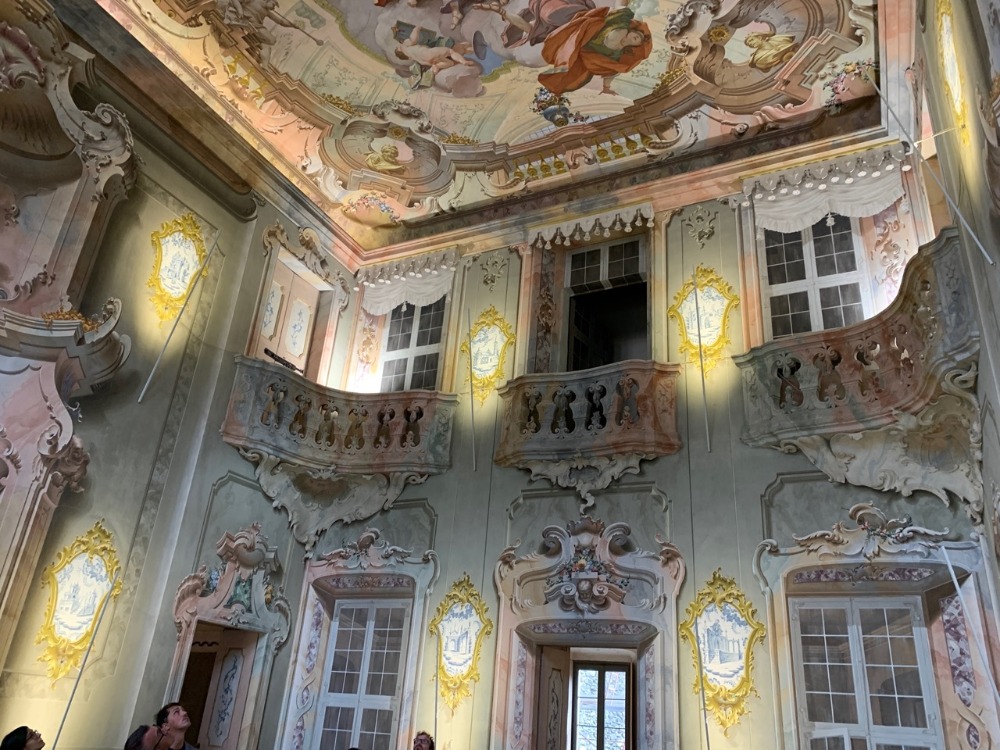
The heart of the palace is the Salone d’Onore. Here, on the ceiling, the painter Cesare Ligari, one of the most renowned in Valtellina, painted “The triumph of truth through the arts and sciences over ignorance.” An important theme, linked to the Enlightenment, that the Malacrida family wished to embrace.
The interior decoration continues with stuccoes, wooden ceilings, original furnishings, and golden decorations. Throughout the palace, one can feel the atmosphere of the grand residences of northern Italy of the eighteenth century.
🌿 The Italian garden
Behind the palace, the garden unfolds over three terraces, with hedges, pathways, and an open view of the valley. It is a garden designed for pleasure and relaxation, but also to showcase taste and power.
On beautiful days, it is the ideal place for a quiet walk or to take some lovely photos. The panorama visible from up there is among the most beautiful in Morbegno.
👣 How to visit it
- 📍 Address: Via Malacrida – Morbegno (SO)
- 🕒 Opening: by reservation, on certain dates with guided tours
💶 Ticket: free or donation-based, depending on the event
- 📞 Contacts:
- Tel. 0342 606207
- prenotazioni@comune.morbegno.so.it
- palazzomalacrida.morbegno.it
🧭 How to get there
- 🚗 By car: from Sondrio or Lecco via SS38
- 🚂 By train: stop at Morbegno on the Milan – Tirano line
- 🚶 On foot: 5 minutes from the center, walking toward contrada Scimicà
👍 Why it’s worth a visit
Palazzo Malacrida is one of the few examples in Valtellina of a fully decorated noble residence in Lombard Rococo style. It is not just a beautiful palace: it is a living testimony of an era when Morbegno was a rich center open to culture.
The visit is brief but intense, suitable for those who love art, architecture, or simply want to see something different, outside the usual routes.
If you pass through Morbegno, take an hour to discover this elegant and almost secret corner of the town. It’s worth it.